Education in Bulgaria: Where a “2” Is a Death Sentence, and Graduation Is Louder Than a Wedding


When we think of Bulgaria, golden beaches and rose oil usually come to mind first. But the country’s education system has its own unique — sometimes strange to foreigners, yet very interesting — features. From unusual grading to a student district that never sleeps, here’s what you need to know.
Knowledge Day is not September 1
While most European schoolchildren have already been “gnawing on the granite of science” for two weeks, Bulgarian kids are still enjoying summer. The school year in Bulgaria officially starts on September 15.
Why? It’s a historical tradition tied to the country’s agricultural past, when children helped their parents harvest crops until mid-September. Even though times have changed, the date was kept — partly to extend the tourist season and summer holidays.
Grades: A “6” is the dream, and there’s no “1”
Bulgaria uses a six-point grading scale:
- 6 (Отличен / Otlichen) – Excellent. Getting a “perfect 6” is prestigious.
- 5 (Много добър / Mnogo dobǎr) – Very good.
- 4 (Добър / Dobǎr) – Good.
- 3 (Среден / Sreden) – Satisfactory (the minimum passing grade).
- 2 (Слаб / Slab) – Fail. If a student gets a year-end “2” in any subject, they repeat the year.
Fun fact: Teachers do not officially give a “1”. The lowest possible grade is a “2”.
The cult of foreign languages
Bulgaria is a small country, so knowing foreign languages is a real window to the world. After 7th grade, fierce competition begins for places in so-called language gymnasiums (specialised language high schools).
The most intense period comes in the 8th grade of these schools — the year called “подготвителен” (podgotvitelen), meaning preparatory. Students study their profile language (English, German, Spanish, etc.) for 18–20 hours a week. All other subjects are reduced to a minimum. As a result, after just one year, pupils speak the foreign language fluently, and from then on biology, history and literature are taught in that language.
May 24 is more important than graduation
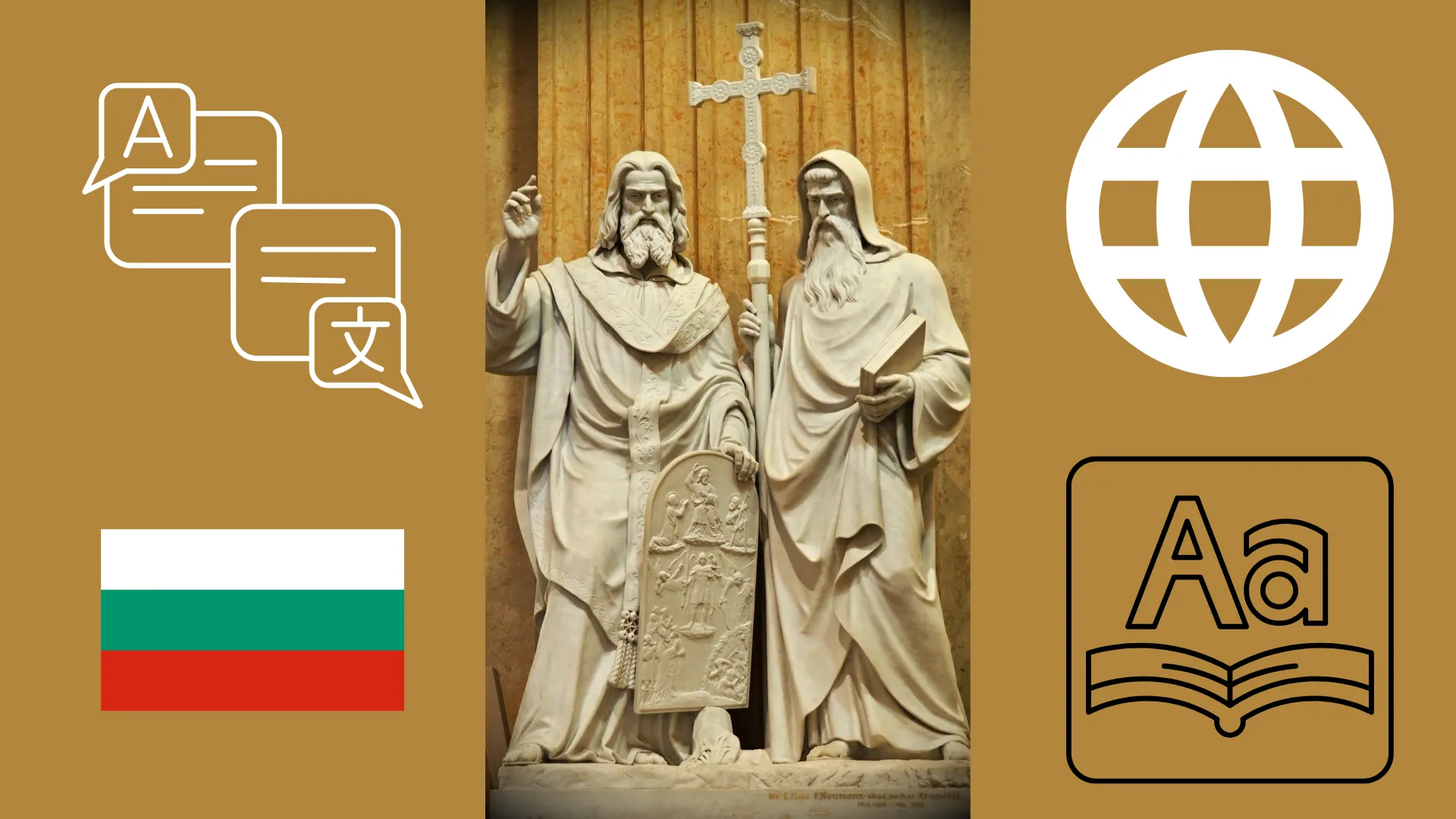
For Bulgarians, education is a matter of national pride. May 24 — the Day of Bulgarian Education, Culture and Slavonic Literature — is celebrated on a massive scale.
It’s far more than a simple school assembly. The whole country takes to the streets in parades honouring Saints Cyril and Methodius. Bulgarians are extremely proud that their country was the cradle of the Cyrillic alphabet and remind everyone of it whenever possible. On this day, portraits of the holy brothers appear in shop windows, schools and universities everywhere.
Matriculants and counting to twelve
The Bulgarian prom (бал / bal) is something between a Hollywood movie and a Brazilian carnival. Graduating students are called абитуриенти (abiturienti).
In May, cities fill with processions of expensive cars. Graduates in luxurious dresses and suits lean out of the windows, honking, whistling and — most importantly — shouting in unison:
“One, two, three… Twelve!”
Why twelve? Because school in Bulgaria lasts 12 years. This countdown symbolises the completion of each school year.
“Studentski grad”: A city within a city
In the capital Sofia there is a unique district called Studentski grad (Student City). It’s not just a campus — it’s an entire residential area where the dormitories of almost all Sofia universities are located.
Key features:
- Over 40,000 students live here.
- Incredible concentration of clubs, discos, bars and cheap traditional taverns (механа / mehana).
- Life never stops — it’s truly 24/7.
- Dormitory rent is symbolic, making higher education very affordable.
Quick summary
Bulgarian education is a mix of old socialist traditions (strict discipline, the deadly “2”) and modern European standards (the Bologna system at universities). But what really sets it apart from other countries is the incredible, loud and heartfelt joy with which Bulgarians turn the end of each educational stage into nationwide celebrations.