What Is Everyday Life Like in Bulgaria?

By a European Affairs Correspondent
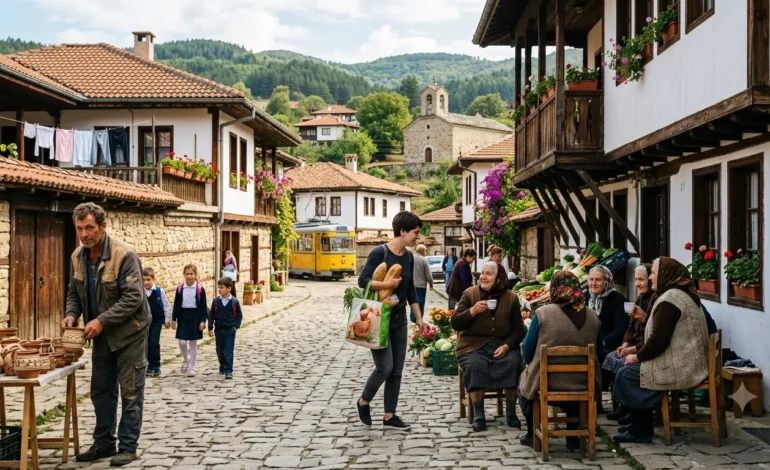
It is half past eight on a Tuesday morning in Sofia, and the city is already wide awake. Outside a small bakery on Graf Ignatiev Street, a queue has formed—office workers clutching phones, an elderly man in a flat cap, a young mother pushing a pram with one hand and checking her watch with the other. Inside, the glass cases are stacked with banitsa, the country’s beloved cheese-and-egg pastry, still warm from the oven. The smell of fresh bread and strong espresso drifts into the cool morning air.
A few blocks away, trams clatter past Soviet-era apartment blocks whose balconies overflow with potted geraniums and drying laundry. On the next street, a gleaming co-working space has opened where a state-run hardware shop once stood. A software engineer in his twenties unlocks his bicycle outside; his colleague, a project manager who relocated from Germany three years ago, waves from a café window.
This is Bulgaria on an ordinary morning—and ordinary mornings here tend to surprise people who arrive expecting something simpler, or something more exotic. The reality is both more mundane and more interesting than either assumption.
What is everyday life really like in Bulgaria? The answer depends on who you ask, where they live, and how long they have been paying attention.
A Country Between Two Worlds
Bulgaria occupies a curious position in the European imagination. It joined the European Union in 2007, adopted a largely Western-oriented political course, and has seen significant modernisation in its cities over the past two decades. Yet it also sits at the crossroads of the Balkans, carries centuries of Ottoman, Byzantine, and Slavic cultural influence, and remains, in many ways, a deeply traditional society.
This combination shapes daily life in ways that are subtle but pervasive. A Bulgarian family might attend Easter midnight mass in an Orthodox church, then stop at a modern supermarket on the way home and order a pizza through an app. A retiree in Plovdiv might tend her vegetable garden every morning, preserve tomatoes in summer, and video-call her grandchildren in Germany every Sunday. A young entrepreneur in Sofia might pitch international clients on a Monday and spend Saturday hiking the Vitosha mountain that rises, almost implausibly, at the city’s southern edge.
Bulgaria is not stuck between the past and the present—it simply contains both, often within the same street.
City Life vs. Small Town, Village vs. Capital
To understand daily life in Bulgaria, it helps to understand that the country is not one experience but several, depending almost entirely on where you happen to be living.
Sofia
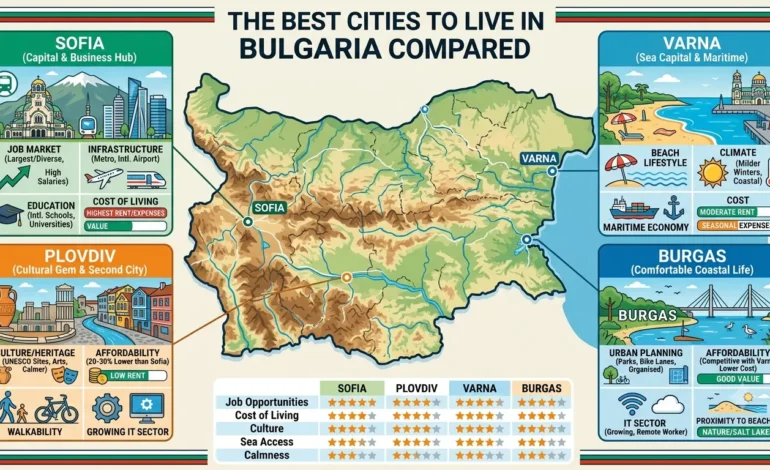
Sofia, the capital, is home to roughly 1.3 million people and functions as a genuinely European city in most practical respects. It has a metro system, reliable internet infrastructure, international restaurants, a growing creative and tech sector, and a café culture that rivals many Western European capitals. Traffic, however, is a persistent problem, particularly during rush hours, and housing costs have risen sharply in recent years as demand from remote workers and investors has pushed prices in central neighbourhoods well beyond what many local salaries can comfortably sustain.
Life moves quickly in Sofia by Bulgarian standards, though slowly by London or Vienna standards. That middle pace suits many people well.
Plovdiv, Varna, and Burgas
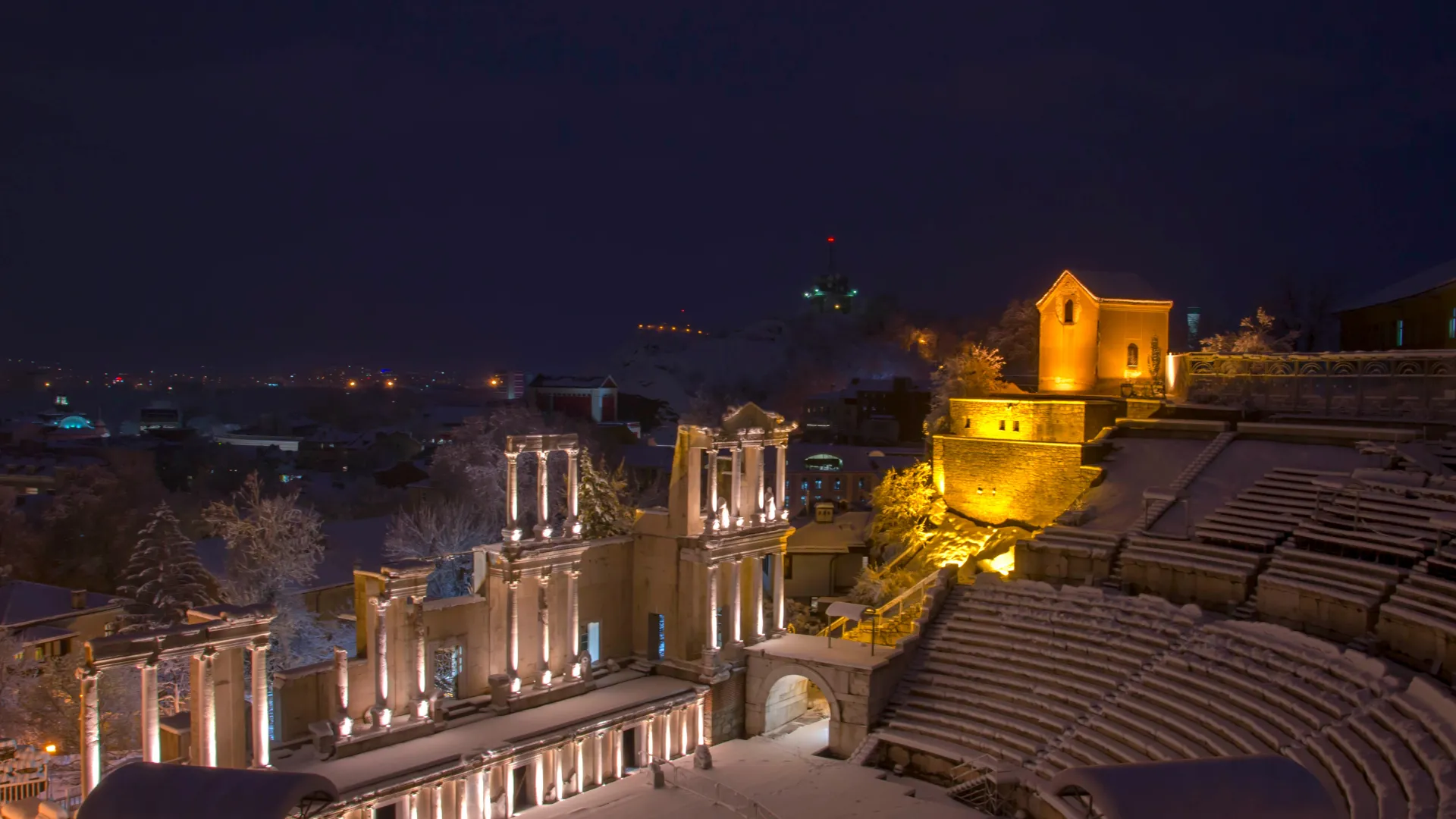
Plovdiv, Bulgaria’s second-largest city, is arguably the country’s most liveable urban centre. It has a beautifully preserved old town, a vibrant arts scene, a long pedestrianised main street lined with cafés, and a palpable sense that things are being built rather than just maintained. Since its year as a European Capital of Culture in 2019, it has attracted increasing attention from both tourists and expats.
Varna and Burgas, on the Black Sea coast, have their own rhythms. In summer they are buzzing, tourist-heavy, and economically busy. In winter they are quieter, more local, and—many residents will tell you—considerably more pleasant. The sea never really leaves the daily atmosphere even in February.
Smaller Cities and Rural Life
Step outside the major urban centres and the pace slows considerably. Cities like Ruse, Stara Zagora, and Blagoevgrad have their own universities, commercial districts, and communities, but employment opportunities are narrower, and younger residents often face the difficult choice of whether to stay or move to Sofia—or further afield. Rural villages, meanwhile, are a world of their own: quieter, often strikingly beautiful, and increasingly ageing, as emigration has drawn generations of working-age adults abroad. Some villages have been partially revitalised by remote workers or returning diaspora members, but the broader trend of rural depopulation remains one of Bulgaria’s most pressing long-term concerns.
Work and Career
The Bulgarian working day typically begins between eight and nine in the morning and ends around five or six in the afternoon, though this varies considerably by industry. Office culture tends to be relatively formal in older or state-affiliated institutions, and considerably more relaxed in the growing private sector, particularly in technology companies.
Bulgaria has developed a substantial IT industry over the past fifteen years, and technology roles—software development, cybersecurity, data science, UX design—now represent some of the best-paid and most internationally competitive work available in the country. Sofia in particular has become a recognisable address in European tech circles, hosting regional offices of international companies and producing a steady stream of talented engineers.
Beyond tech, the tourism and hospitality industries are major employers, especially along the Black Sea and in ski resorts like Bansko and Borovets. The service sector, retail, agriculture, and manufacturing also absorb significant portions of the workforce.
The salary picture, however, remains one of the more challenging aspects of Bulgarian professional life. Average wages are among the lowest in the EU, though they have been rising steadily. The gap between Bulgarian salaries and those in Western Europe is real and consequential—it is, in fact, one of the primary drivers of emigration. A software engineer in Sofia might earn a competitive European salary; a nurse, a teacher, or a shop assistant often cannot say the same. For many Bulgarians, the arithmetic of daily life involves careful budgeting in ways that would surprise visitors from wealthier EU states.
Remote work has changed the equation somewhat, allowing a growing number of Bulgarians to earn Western salaries while living in Bulgaria—and attracting foreign digital nomads for the same reason.
Food as Daily Ritual
Bulgarians take their food seriously, and this is not merely a travel-brochure observation. It reflects something genuine about the culture’s priorities: freshness matters, seasonality matters, and the table is where social life happens.
Morning
Breakfast tends to be a modest affair on weekdays. A banitsa from the bakery, a glass of ayran (a cold yoghurt drink), or simply coffee and something sweet is the daily norm for working adults. Bulgarian yoghurt—thick, tangy, and made from Lactobacillus bulgaricus, the bacterium named after the country—is a staple that appears at practically every meal and is eaten with genuine pride.
On weekends, breakfast stretches. Eggs, feta cheese, tomatoes and cucumbers, olives, bread—a spread that resembles what other countries call a mezze but is simply considered a proper Saturday morning here.
Lunch and Dinner
Lunch is still treated as the main meal of the day in many households, though this tradition is being eroded by urban working patterns. Traditional Bulgarian cuisine leans heavily on vegetables, legumes, and grilled meats. Shopska salata—a simple combination of tomatoes, cucumbers, peppers, onions, and crumbled white cheese—appears on nearly every restaurant table and at most home gatherings. Tarator (cold cucumber and yoghurt soup), kavarma (slow-cooked meat and vegetable stew), grilled kebapcheta, and various forms of stuffed peppers are everyday staples rather than special occasions.
Fresh produce is taken seriously. Farmers’ markets, known as pазар (pazar), operate in most towns and attract shoppers who prefer to buy their tomatoes from a vendor who grew them rather than from a supermarket shelf. In summer, it is normal for families to spend afternoons preserving—making jars of lyutenitsa (a roasted pepper and tomato relish), pickled vegetables, and jams that will stock the pantry through winter. This is not mere nostalgia; it is practical, economical, and considered genuinely important.
Eating out is affordable by Western European standards, and Bulgarian cities now support a remarkably diverse food scene—from traditional mehanas (tavern-style restaurants) to sushi, Middle Eastern food, and upscale tasting menus.
Shopping and the Cost of Everyday Life
Day-to-day living in Bulgaria is genuinely affordable, though the gap between local salaries and local prices has been narrowing as inflation bites and housing costs rise.
A monthly grocery bill for a couple cooking at home is manageable on most Bulgarian salaries. Supermarket chains—Lidl, Kaufland, Fantastico, and local equivalents—are well-stocked and competitive on price. Farmers’ markets offer fresher produce, often at lower prices than supermarkets, particularly for seasonal vegetables and fruit.
Utilities, public transport, and eating out remain relatively cheap by EU standards. A coffee in a Sofia café costs a fraction of what it would in Amsterdam or Copenhagen. A restaurant meal for two with wine can easily be had for under 40 euros, often considerably less.
Housing is the area where costs have risen most sharply, particularly in Sofia. Renting a one-bedroom flat in the city centre now costs significantly more than it did a decade ago, though it remains substantially cheaper than comparable accommodation in Western capitals.
Shopping malls have become a fixture of Bulgarian urban life, particularly as entertainment destinations during colder months. Online shopping has also expanded rapidly, with platforms like eMAG (the regional Amazon equivalent) handling everything from electronics to groceries.
For foreign visitors or expats arriving with salaries from wealthier countries, Bulgaria can feel remarkably inexpensive. For Bulgarian residents on local wages, the calculus is considerably more nuanced.
Family, Community, and Social Life
Perhaps the most consistent observation made by foreigners who spend time in Bulgaria—whether as visitors, expats, or long-term residents—is how central family and social connection remain to everyday life.
Extended family networks are tight. It is not unusual for grandparents to play a daily role in childcare, for adult children to live near (or with) parents for longer than would be typical in Northern Europe, and for Sunday lunches to involve three or four generations gathered around the same table. This is not simply economic necessity, though it sometimes is that too—it reflects a genuine cultural prioritisation of family proximity.
Social life revolves heavily around shared food and drink. Friends meet in cafés rather than at home, birthdays are celebrated with elaborate meals, and name days—the feast day of one’s patron saint—are observed with almost as much enthusiasm as birthdays. Bulgarians with the name Ivan or Ivanka, for example, celebrate Ivanovden on January 7th, and it is expected that friends and colleagues will stop by or call.
Hospitality is taken seriously. Being invited into a Bulgarian home typically means being fed substantially, being offered homemade rakia (the country’s beloved fruit brandy), and being pressed to take something with you when you leave. Refusing such hospitality requires diplomatic skill.
Getting Around
Sofia’s metro system, though not the most extensive in Europe, is clean, reliable, and expanding. It covers the main arteries between the airport, the railway station, the city centre, and several outlying neighbourhoods. Buses and trams supplement the metro, though they can be slow during peak hours and somewhat unpredictable in scheduling.
Outside Sofia, public transport becomes patchier. Intercity buses are the most common form of long-distance travel for those without cars, and they are generally affordable if not always punctual. The railway network covers most of the country but suffers from aging infrastructure and slow journey times—a train from Sofia to Varna, for instance, takes around seven hours, a journey that could be driven in five.
Car ownership is high, and driving culture in Bulgaria—particularly in cities—can be energetic. Road quality varies considerably: motorways connecting major cities have improved markedly, but secondary roads in rural areas can be poor. For daily commuters in Sofia, traffic congestion during rush hours is a familiar frustration.
Cycling infrastructure is developing, particularly in Sofia and Plovdiv, though it remains far less comprehensive than in Northern European cities.
Education and Healthcare
Bulgaria’s public education system is free and compulsory, and the country has a strong tradition of valuing academic achievement. Schools follow a fairly rigorous curriculum, and mathematics and science education in particular have a good reputation. Private schools exist and have grown in popularity in urban areas, offering smaller class sizes, English-language instruction, or alternative pedagogical approaches.
University education is affordable compared to Western Europe, and Sofia University, the Technical University of Sofia, and several medical and economics universities attract students from across the region. However, emigration of talented graduates remains a significant challenge—many of Bulgaria’s best-educated young people leave for opportunities in Germany, the UK, the Netherlands, or elsewhere.
Healthcare is a more complex picture. Bulgaria has a national health insurance system, and most residents are covered for basic medical care. Public hospitals vary considerably in quality, with facilities in Sofia and major cities generally better equipped than those in smaller towns. Waiting times in the public system can be long, and many Bulgarians—particularly for specialist care or dental treatment—turn to private clinics, which offer faster access and often higher standards of service. Medical care, even privately, is considerably cheaper than in Western Europe, which is one reason Bulgaria has become a destination for medical tourism.
Leisure, Weekends, and the Outdoors
Ask a Bulgarian what they do on weekends and you will likely hear some combination of: family, food, nature, and perhaps a café. The outdoor life is taken seriously here, and the country’s geography makes it easy to understand why.
The mountains are never far. Vitosha looms over Sofia and is accessible by bus or car within twenty minutes from the city centre, offering hiking trails, skiing, and enough wilderness to genuinely forget the city below. The Pirin, Rila, and Rhodope ranges attract hikers, skiers, and cyclists from across the country and beyond. Rila Monastery, nestled deep in the mountains and still functioning as a religious site, is both a national landmark and a working part of Bulgarian spiritual life.
The Black Sea coast draws enormous domestic tourism in summer—Bulgarians who can afford it rent apartments in Varna or Burgas for weeks at a time, or escape to smaller coastal towns like Nesebar, Sozopol, or Sinemorets. In winter, Bansko becomes the destination of choice for skiers, and its combination of ski slopes and lively après-ski scene has made it increasingly popular with foreign visitors too.
Culturally, Bulgaria has a rich calendar of festivals—from the Kukeri masquerade traditions in January and February to summer folk music festivals, wine festivals, and international film events in Plovdiv. Football remains a popular spectator sport, though Bulgarian club football has declined in competitive standing. Volleyball, basketball, and wrestling have strong traditions and produce competitive athletes.
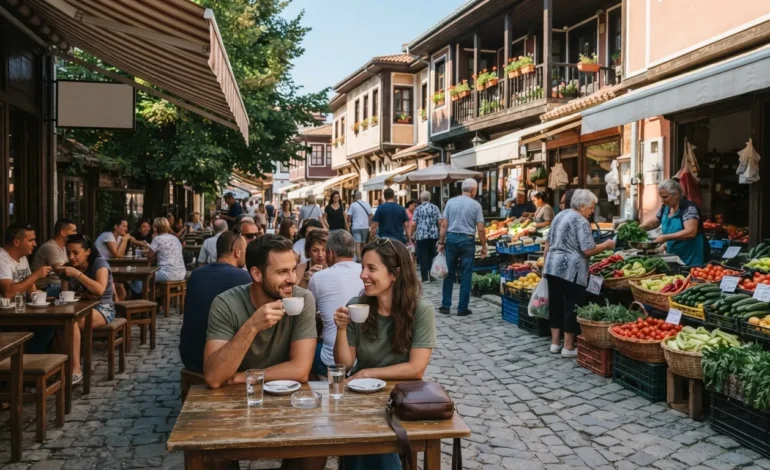
Cafés deserve special mention. Bulgarian café culture is deeply embedded in daily life. Sitting in a café for two hours, nursing an espresso and talking, is not considered unusual or indulgent—it is simply how social time works. The café is office, living room, and town square rolled into one.
The Harder Realities
A fair account of Bulgarian life cannot avoid its more difficult dimensions.
Bulgaria is the least wealthy country in the EU by GDP per capita, and while this measure does not capture everything about quality of life, it reflects real constraints. Salaries in many sectors remain low, inflation has eroded purchasing power in recent years, and the public services—healthcare, transport, education—are under ongoing strain from underfunding and demographic pressure.
Emigration has transformed Bulgarian society over the past three decades. Since the fall of communism and accelerating after EU accession, an estimated two million Bulgarians have left the country. Many are young, educated, and professionally skilled—the precise people whose contributions the domestic economy most needs. The population has declined from around nine million in 1989 to around six and a half million today, and the ageing of the remaining population presents serious long-term challenges for pensions, healthcare, and economic vitality.
Bureaucracy can be exhausting. Administrative processes—registering a business, dealing with property documents, navigating the healthcare system—often involve paperwork, queuing, and an institutional logic that seems designed for a different era. This frustrates locals and foreigners equally, and is one of the most consistent complaints heard from expats who otherwise enjoy living in the country.
Regional inequality is stark. The gap between life in Sofia and life in a rural village in the Rhodopes or the Danube plain is not merely economic—it is a difference in access to services, opportunities, and basic infrastructure. This inequality drives internal migration to the capital and external emigration abroad, and it remains one of the country’s most persistent structural problems.
Why Foreigners Choose to Stay
Despite these challenges, Bulgaria has become a genuine destination for a growing community of expats, digital nomads, retirees, and international students—and many of them, once arrived, find reasons to stay longer than planned.
The cost of living is the initial draw for most. Renting a spacious flat in central Sofia for what would cover a broom cupboard in Amsterdam focuses the mind. But the reasons people stay tend to be less financial. The country’s natural beauty—mountains, coastline, ancient forests—is accessible and relatively uncrowded. The pace of life, even in Sofia, is less relentless than in comparable Western European capitals. The food is good. The people, once initial reserve is overcome, are warm and generous hosts.
Safety is another factor that surprises visitors. Bulgaria is, statistically, a very safe country. Street crime in its cities is low, and walking alone at night in Sofia or Plovdiv is something most residents do without concern.
The learning curve is real. Bulgarian is written in Cyrillic and is not easy for speakers of Western European languages to acquire quickly. Administrative processes conducted entirely in Bulgarian can be bewildering. Finding English-speaking doctors or officials outside major cities is not always straightforward. But these are obstacles that practical people navigate, and the expat communities in Sofia, Plovdiv, and on the Black Sea coast have developed enough depth to provide support networks, recommendations, and the occasional moment of collective commiseration.
The Rhythm of a Life
Everyday life in Bulgaria is lived at a scale that resists easy summary—it is too varied by location, too shaped by individual circumstance, too full of contradictions to reduce to a single story.
But certain rhythms persist across all of it. The morning banitsa and coffee. The Sunday lunch that stretches into the afternoon. The summer weekend spent somewhere near water or high in the mountains. The name day celebrations that pull a neighbourhood together around a table. The quiet satisfaction of a vegetable garden, a jar of homemade lyutenitsa, a glass of rakia poured for a guest.
Bulgaria is a country that has survived considerable historical turbulence—empires, occupations, communism, post-communist transition—and the resilience this has cultivated is visible in daily life as a kind of practical cheerfulness. People manage. They find their way. They grow tomatoes and they build software companies. They send their children abroad and video-call them every Sunday.
It is a place that asks something of you—patience with its bureaucracy, curiosity about its language, a willingness to look past the surface—and tends to reward that effort with something that is harder to quantify than a cost-of-living index: a genuine sense of being somewhere with deep roots, real rhythms, and a warmth that does not perform for tourists.
That, perhaps, is the most honest answer to the question of what everyday life in Bulgaria is actually like. It is, in the best sense of the word, a life—imperfect, particular, and unexpectedly rich.