How to Travel Around Bulgaria Without a Car


By an experienced travel journalist and Bulgaria specialist
Can You Really Explore Bulgaria Without Driving?
Picture this: you’ve just landed at Sofia Airport, backpack slung over one shoulder, itinerary scribbled in a notebook. You want to stand at the gates of Rila Monastery at dawn, sip coffee in Plovdiv’s Kapana Quarter, watch the sunset over the Danube from Ruse, and swim in the Black Sea before the month is out. There’s one thing you haven’t arranged, though: a rental car. Maybe you don’t drive, maybe you’d rather not navigate unfamiliar mountain roads, or maybe you simply want to travel differently.
Can you still do all of this? Yes — but it requires a specific kind of planning.
Bulgaria is frequently described, even by experienced Eastern European travelers, as a country where having a car makes everything easier. That’s true. But “easier” is not the same as “necessary.” Millions of Bulgarians move around their country every day by train, bus, and minibus. Tourists who take the time to understand the system — its quirks, its rhythms, its surprising strengths — often return home saying that traveling without a car forced them to slow down, and that slowing down was the best thing that could have happened.
The secret is understanding Bulgaria’s transportation network and planning around its strengths and limitations. This guide gives you everything you need to do exactly that.
Understanding Bulgaria’s Geography and Transportation Challenges
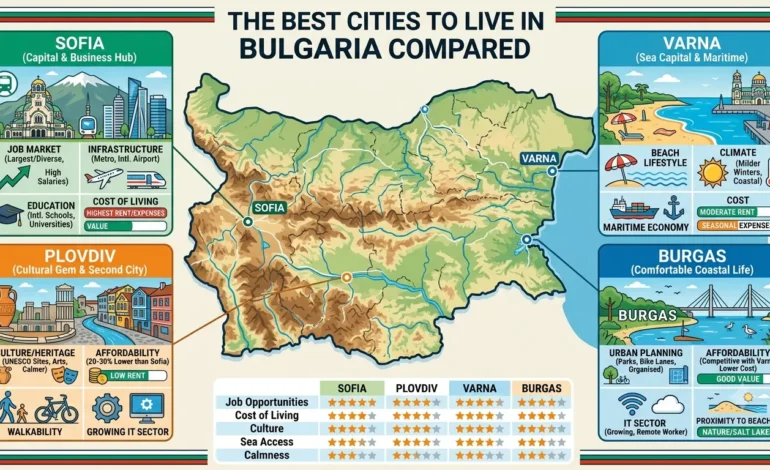
Bulgaria occupies roughly 110,000 square kilometres in the eastern Balkans, which makes it slightly smaller than England but with significantly more dramatic terrain. The country is divided almost exactly in half by the Balkan mountain range — the Stara Planina — running east to west across the country like a spine. South of this lies the Thracian Plain, where Plovdiv sits, and eventually the Rhodope Mountains. North lies the Danubian Plain, rolling gently toward the river border with Romania. East, the land drops to the Black Sea coast.
This geography matters enormously for transportation. Crossing the Balkan Mountains by road or rail takes time. The mountain roads are scenic but slow. Train routes often follow valley floors and river gorges, meaning the journey between two nearby points on a map can take twice as long as the distance suggests.
The country’s main cities — Sofia, Plovdiv, Varna, Burgas, Veliko Tarnovo, Ruse, and Stara Zagora — are all reasonably well connected by bus and, with varying degrees of efficiency, by train. The challenges arise when you want to reach smaller towns, mountain villages, or coastal resorts off the main corridors.
A useful mental framework: divide Bulgaria into three accessibility zones. The first is urban Bulgaria — Sofia, Plovdiv, Varna, and Burgas — where public transport is frequent and reliable. The second is connected Bulgaria — medium-sized towns like Ruse, Shumen, Stara Zagora, and Blagoevgrad — reachable by regular bus or train services. The third is rural Bulgaria — villages, remote monasteries, mountain trailheads, and wine-country estates — where services are sparse, seasonal, or absent. Traveling without a car is straightforward in the first zone, manageable with planning in the second, and requires organised tours or creative solutions in the third.
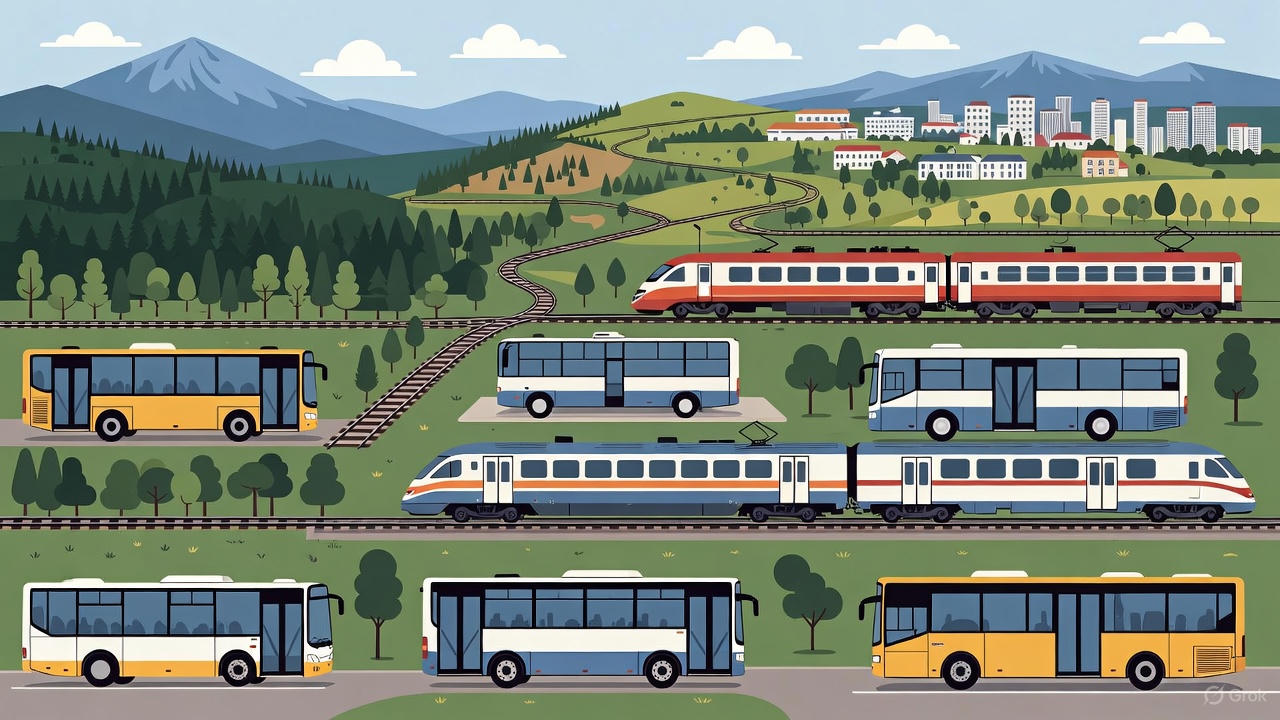
Bulgaria’s Main Transportation Options Explained
Trains
The Bulgarian State Railways, known as BDŽ (Български държавни железници), operate an extensive network by Balkan standards, but it moves at a pace that surprises travelers used to Western European high-speed rail. Trains in Bulgaria are generally slow, occasionally delayed, and seldom air-conditioned in older stock — but they are cheap, atmospheric, and often spectacularly routed through mountain landscapes that reward patience.
Main routes and realistic travel times:
- Sofia to Plovdiv: Approximately 2 hours 15 minutes to 3 hours depending on the service. Buses cover the same distance in 2 hours, but the train is a pleasant option and departs frequently.
- Sofia to Varna: 7 to 8 hours by train. This overnight or long-distance journey is feasible but most travelers prefer the bus (6 hours) or a short domestic flight.
- Sofia to Burgas: Around 7 hours. Again, bus or plane is faster.
- Sofia to Veliko Tarnovo: No direct train. You take a train to Gorna Oryahovitsa (approximately 3.5 hours), then a bus or taxi to Veliko Tarnovo (20 minutes). Alternatively, take a direct bus from Sofia, which takes around 3.5 hours.
Tickets are purchased at station windows, and very few stations have functioning online booking available in English — though the BDŽ website does offer online purchase. It’s wise to buy tickets in person a day before travel for long-distance routes during summer.
When trains make sense: scenic routes such as Sofia to Vidin through the Iskar Gorge, or the narrow-gauge railway to Bansko (seasonal, departs from Septemvri), are genuinely memorable experiences. The slow pace becomes the point.
When to take the bus instead: almost any direct city-to-city journey where speed matters, or where no direct train route exists.
Buses
Buses are the backbone of intercity travel in Bulgaria without a car, and understanding this is the single most useful thing you can do before your trip. If you can only remember one thing from this guide: take the bus.
The national network is run by a patchwork of private companies — Biomet, Etap Adress, Union Ivkoni, Hebros Bus, and dozens of regional operators. This might sound chaotic, but in practice the system works well. Services between major cities run frequently (hourly or every two hours on busy corridors), are air-conditioned, moderately comfortable, and priced very affordably for Western European visitors.
Sofia’s main bus terminals are the Sofia Central Bus Station (Централна автогара), adjacent to the central railway station, and the South Bus Station (Южна автогара), which handles routes to Plovdiv, Smolyan, and destinations along the Thracian corridor. Knowing which terminal serves your destination is important — don’t assume all buses leave from the same place.
Ticket booking: many companies now sell online through platforms like Biomet.bg, Avtogari.info, or their own websites. Buying a day or two in advance for popular summer routes (especially to the coast) is strongly advised. At quiet times of year, turning up at the station and buying on the day is usually fine.
Rural connections: many smaller towns and villages are served by infrequent minibus services (маршрутки — marshrutki) that run once or twice a day, often timed around school hours or market days. These are the lifeline of rural Bulgaria and can get you to places trains never reach, but you must check schedules carefully and plan around them.
Urban Public Transport
Sofia has the most developed urban network. The metro (Метро) runs two main lines, with a third connecting Sofia Airport to the centre, making the airport transfer unusually straightforward — take the metro to Serdika station for the centre. In addition to the metro, trams, trolleybuses, and buses cover the city extensively. Single tickets are inexpensive; a travel card for multiple days is available and worth considering. The Moovit app works well in Sofia for navigation.
Plovdiv’s old town is largely walkable — this is genuinely one of the most pedestrian-friendly historic centres in Bulgaria. City buses connect the train station and bus terminal to the old town area. A taxi or Bolt ride from the train station to the old town costs very little.
Varna has a reasonable urban bus network linking the train station, the sea garden, and the beaches. The centre is walkable. The city also serves as a hub for coastal bus services in summer.
Burgas is smaller and very walkable. The central beach, bus station, and train station form a compact triangle that requires no urban transport at all for most visitors.
Taxis and Ride-Hailing
Taxis remain useful for specific situations: airport arrivals at odd hours, short distances in towns without frequent buses, reaching hotels outside the walkable centre, or getting to trailheads that no bus serves.
The single most important taxi tip in Bulgaria: use the Bolt app. Bolt (formerly Taxify) operates in Sofia, Plovdiv, Varna, Burgas, and several other cities, giving you fixed prices, driver ratings, and a paper trail. This eliminates the main risk associated with Bulgarian taxis, which is overcharging of tourists at airports and tourist hotspots. Licensed Yellow Cab taxis with visible meters are also legitimate and usually have starting rates prominently displayed on the door — always check these before getting in.
At Sofia Airport specifically, walk past any driver approaching you in the arrivals hall and use Bolt, or find the official taxi rank outside. The difference in price between an opportunistic airport driver and a Bolt ride into the centre can be significant.
In cities without Bolt coverage, ask your accommodation to call a taxi from a recommended local company.
Organised Tours and Local Transfers
Organised tours become essential — not merely convenient — for reaching certain destinations without a car. These include:
- Rila Monastery (no reliable direct public transport from Sofia)
- Seven Rila Lakes (the trailhead is only reachable by shuttle or tour from Sapareva Banya)
- Belogradchik Rocks (limited bus access, usually requires a tour from Vidin or Sofia)
- Thracian tombs near Kazanlak (the Valley of the Thracian Kings is spread across a large rural area)
- Wine regions (Melnik, Struma Valley)
Tours from Sofia to Rila Monastery run daily throughout the tourist season, typically lasting 8 to 10 hours and including a stop at Boyana Church. These are sold at reputable tour companies and hostels across the city. Prices are very reasonable — often less than renting a car for a day once you account for fuel and insurance.
For mountain areas, some accommodations in base towns like Bansko, Borovets, or Smolyan organise their own shuttle services or can arrange private transfers. Always enquire when booking.
Getting Around From Sofia Without a Car
Sofia is the natural starting point for most trips around Bulgaria, and it is served by an international airport with direct connections from much of Europe. Once you’ve arrived, the metro takes you to the city centre in 20 minutes.
Day trips from Sofia accessible without a car:
- Boyana Church (UNESCO-listed medieval frescoes): take bus 64 or bus 107. A taxi or Bolt is faster and costs very little. Allow half a day.
- Vitosha Mountain: tram 2 or bus 93 from the centre reaches the lower slopes. The Simeonovo area has a cabin lift (gondola) for reaching higher terrain.
- Bankya (spa town): reachable by suburban train from Sofia Central Station. Pleasant half-day escape from the city.
- Koprivshtitsa (National Revival architecture): two buses run daily from Sofia’s Central Bus Station, timed around school schedules. The journey takes about 2 hours. This is feasible but requires planning — check the return bus time before you go.
Weekend trips from Sofia:
- Plovdiv: frequent buses (every 1–2 hours), taking around 2 hours. Perfect weekend destination. Stay two nights to enjoy it properly.
- Rila Monastery: daily tours available; no reliable independent public transport option without significant planning.
- Bansko: buses run from Sofia’s South Bus Station or the Women’s Market bus area. Journey around 3 hours. Or take the slow but scenic train via Septemvri.
- Ruse: train or bus, around 4–4.5 hours. Worth the journey for the Danube panorama and Art Nouveau architecture.
Exploring Bulgaria’s Historic Cities Without a Car
Plovdiv
Plovdiv is the easiest major Bulgarian city to explore without a car, and arguably the most rewarding. The old town — set on three hills above the Thracian Plain — is almost entirely pedestrianised, and the distance from the main bus terminal (a short walk west of the train station) to the cobblestoned streets of the old quarter is manageable on foot or via a cheap taxi.
Train and bus connections from Sofia are both frequent. The bus is marginally faster; the train slightly more atmospheric. From Plovdiv, buses run onward to Bachkovo Monastery (about 30 minutes south), the Rose Valley towns of Kazanlak and Karlovo, and toward the Rhodope Mountains via Asenovgrad.
Plovdiv’s Kapana arts district, the Roman Amphitheatre, and the ethnographic museum houses of the old town can all be explored entirely on foot. Allow at least two full days.
Veliko Tarnovo
Bulgaria’s medieval capital is more challenging to reach but worth every effort. The most practical route from Sofia is a direct bus from Central Bus Station (around 3.5 hours). Alternatively, trains go to Gorna Oryahovitsa (about 3.5 hours), from where buses and taxis cover the final 10 kilometres to Veliko Tarnovo.
Once there, the city is dramatic to walk — built into steep limestone ridges above the Yantra River — though the hills require reasonable fitness. The Tsarevets Fortress, the Samovodska Charshiya artisan street, and the Asenova quarter are all walkable. Local buses connect the city’s three main residential ridges for those who find the slopes challenging.
Day trips from Veliko Tarnovo to Arbanasi (the well-preserved 17th-century village above the city) are possible by taxi; it’s only a few kilometres. Ivanovo Rock Churches (UNESCO-listed) require a bus to the village of Ivanovo and then a walk — manageable but infrequent services mean checking schedules in advance.
Ruse
Ruse is Bulgaria’s most underrated city, and it is well-served by transport. Direct trains from Sofia run in around 4 to 5 hours, and the train station is central. Buses also connect from Sofia and Varna.
The city’s compact Art Nouveau and Baroque centre — built during the late Ottoman and post-Liberation periods when Ruse was the most prosperous city in the country — is entirely walkable. The Danube promenade is flat and pleasantly slow. Day trips to the Ivanovo Rock Monastery and the Rock-Hewn Churches of Ivanovo (UNESCO World Heritage Site) are accessible by local bus. The crossing to Giurgiu in Romania for a day trip into Bucharest is straightforward by bus across the Danube Bridge.
Koprivshtitsa
This small mountain town of 19th-century National Revival architecture presents the classic dilemma of traveling in rural Bulgaria without a car. It’s reachable, but the schedule is unforgiving. Two buses run daily from Sofia’s Central Bus Station. The train station is 11 kilometres from the town itself (a minibus connects them, but it’s irregular). The safest approach: take the morning bus, explore the town on foot for four to five hours — the entire historic core is contained within a fifteen-minute walk — and return on the afternoon bus. Do not miss those times.
Traveling to the Bulgarian Black Sea Coast Without a Car
Varna
Varna — Bulgaria’s “Sea Capital” — is well-connected to Sofia by both bus (approximately 6 hours) and train (7 to 8 hours). There is also a Varna Airport with domestic connections from Sofia (flight time around 1 hour), which becomes worthwhile if you’re tight on time.
The city itself is very walkable. The Sea Garden (Morska Gradina) — one of the longest coastal parks in Europe — connects the beaches directly to the city centre. Local buses reach the beaches at Zlatni Pyasatsi (Golden Sands, about 18 km north) throughout the summer. A taxi or Bolt covers the same distance affordably.
From Varna, coastal buses and minibuses run north to Balchik and Albena during the summer season, making day trips to both feasible. The Balchik Botanical Garden and the palace of Queen Marie of Romania are accessible without a car.
Burgas
Burgas sits at the southern end of Bulgaria’s Black Sea coast and is the gateway to the Southern Coast’s most beautiful towns. Direct buses and trains from Sofia take around 6 to 7 hours. Burgas Airport also receives domestic and international flights.
The city’s central bus station is the hub for onward coastal travel. From here, regular buses run in summer to:
- Sozopol (35 minutes): one of the best-preserved old towns on the coast, built on a rocky peninsula; entirely walkable
- Nesebar (40 minutes): a UNESCO World Heritage Site on another peninsula, with medieval churches and a summer-season tourist atmosphere; easily reached by regular buses from Burgas or by boat from Sunny Beach
- Pomorie (20 minutes): quieter, known for its Black Sea mud baths and wine production
The key limitation is that bus frequency drops sharply outside July and August. Traveling the Southern Coast by bus in spring or autumn requires consulting timetables carefully, as some services run once daily or not at all on Sundays.
Smaller Coastal Towns and the Northern Coast
Balchik, known for its striking chalk cliffs and the Botanical Garden, is reached by hourly buses from Varna in summer (about 1 hour). Kaliakra Cape — a dramatic headland and bird-watching site — requires either a tour or a taxi from Balchik; no bus reaches the tip of the cape.
Sozopol, meanwhile, is the Southern Coast destination most suited to car-free travel. Buses from Burgas run frequently all summer, the old town is compact and pedestrianised, and boat services run along the coast toward Ropotamo Nature Reserve and Primorsko during peak season.
Exploring Bulgaria’s Mountains Without Driving
Mountains cover a significant portion of Bulgaria, and reaching them without a car requires honesty about both the possibilities and the limitations.
Vitosha Mountain (Sofia)
The easiest mountain access in Bulgaria: Vitosha rises immediately behind Sofia and is accessible by urban transport. The Simeonovo gondola (closed for maintenance at various periods — check before visiting) or trails from the Aleko area offer access to the high plateau. This is genuinely car-free hiking, and it’s remarkable to be standing on a 2,000-metre summit within 40 minutes of leaving a central Sofia apartment.
Rila Mountains and Seven Rila Lakes
The Seven Rila Lakes are Bulgaria’s most famous mountain destination, drawing hikers and pilgrims every summer. The route: bus or train from Sofia to Dupnitsa or Sapareva Banya, then a shuttle minibus (runs multiple times daily in summer from Sapareva Banya) to the Panichishte resort area, then a gondola lift to the lake area, then a hike. It sounds complex but is well-trodden. Dozens of agencies in Sofia also offer organised day trips.
Rila Monastery — entirely separate from the lake area — is the country’s most important Orthodox monument. From Sofia, daily tour buses are the most practical option. Independent travelers can take a bus from Sofia’s Women’s Market area to Rila village, then a connecting minibus to the monastery, but schedules are limited and a missed connection leaves you stranded. Tours are more reliable for this specific destination.
Pirin Mountains and Bansko
Bansko is the most accessible mountain town in Bulgaria without a car. Buses run regularly from Sofia (3 hours), and the town itself is compact and walkable. The ski gondola operates in both winter and summer (for hikers). Trails from the gondola terminus reach deep into the Pirin National Park wilderness. For anyone wanting mountain hiking without renting a car, Bansko is the best base in Bulgaria.
The narrow-gauge Rhodope Railway from Septemvri to Dobrinishte (near Bansko) is one of the most memorable train journeys in Bulgaria — slow, winding, and extraordinarily scenic through the foothills. This is a UNESCO-protected route and the journey alone is a reason to travel it.
Rhodope Mountains
Smolyan (the main Rhodope town) is reached by bus from Plovdiv in about 2 hours. From Smolyan, local buses reach Pamporovo (a ski resort with summer hiking) and some village destinations. The Rhodopes are one of the regions where having a car or joining organised tours genuinely changes what you can access. The Trigrad Gorge, the Yagodinska Cave, and the remote village of Shiroka Laka are all challenging without private transport, though tours from Plovdiv and Smolyan do exist.
Sample Itineraries Without a Car
7-Day Bulgaria Without a Car
Day 1–2: Sofia Arrive, settle in, explore the city’s compact historic core on foot. Boyana Church (half-day taxi trip), Vitosha Mountain (afternoon hike by bus), the Banya Bashi Mosque and the Synagogue, the National History Museum (bus or taxi to the western suburbs).
Day 3: Rila Monastery Book an organised day tour from Sofia (departs early morning, returns evening). Full day at the monastery.
Day 4–5: Plovdiv Morning bus from Sofia Central Bus Station (2 hours). Two full days in the old town, Kapana, and a half-day excursion to Bachkovo Monastery (bus from Plovdiv, 30 minutes south).
Day 6–7: Return to Sofia via Koprivshtitsa Morning bus from Plovdiv to Sofia, then afternoon bus from Sofia to Koprivshtitsa (check times carefully). Spend late afternoon and evening in Koprivshtitsa. Return to Sofia the following morning. Depart.
10-Day Bulgaria Without a Car
Days 1–2: Sofia and surroundings Day 3: Rila Monastery (day tour) Days 4–5: Plovdiv Day 6: Bus from Plovdiv to Burgas (approximately 3 hours, change at Stara Zagora or direct bus) Days 7–8: Burgas as a base — day trip to Nesebar, day trip to Sozopol Day 9: Bus or train to Varna (approximately 2 hours along the coast) Day 10: Varna — Sea Garden, Archaeological Museum, day trip to Balchik — return flight or bus to Sofia
14-Day Complete Bulgaria Without Driving
Days 1–2: Sofia Day 3: Rila Monastery (day tour) Day 4: Bus to Bansko (3 hours) Day 5: Hiking from Bansko — gondola to Pirin high zone, return Day 6: Bus back to Sofia, then onward bus to Koprivshtitsa (check connections or overnight in Sofia) Day 7: Bus to Plovdiv (via Sofia if needed) Days 8–9: Plovdiv and Bachkovo Monastery Day 10: Bus from Plovdiv to Kazanlak (Rose Valley; buses run regularly, 1.5 hours) — Valley of the Thracian Kings by taxi from Kazanlak Day 11: Bus from Kazanlak to Veliko Tarnovo (change at Stara Zagora or direct service; 2–3 hours) Days 12–13: Veliko Tarnovo — Arbanasi by taxi, Tsarevets evening light show Day 14: Bus to Varna (approximately 3 hours) for onward flight, or bus back to Sofia
Practical Tips for Car-Free Travel in Bulgaria
Book buses in advance for summer travel. July and August bring significant demand on popular routes to the coast and mountain resorts. Booking two to three days ahead online is sufficient for most routes, but the Sofia–Burgas and Sofia–Varna buses can sell out, especially on Friday afternoons.
Carry cash. While urban ticketing increasingly accepts cards, rural bus stations, minibuses, and some intercity services still operate cash-only. Keep Bulgarian lev (BGN) on hand. Bulgaria uses the lev, not the euro — despite being an EU member state, it had not yet joined the eurozone as of this writing, though accession was in progress.
Download Google Translate with Bulgarian offline. Cyrillic script can be disorienting in stations and on timetables. A translation app with camera function allows you to read signs by pointing your phone at them. Bulgarian station staff, especially outside Sofia, may have limited English, but patience and goodwill go a long way.
Give yourself buffer time between connections. If your plan requires catching a connecting minibus ten minutes after a bus arrives, build in an extra service. Delays are common on rural routes and in summer traffic.
Travel with manageable luggage. Buses store bags underneath, but mountain minibuses and rural services have limited space. Overpacked backpacks become a burden on city buses and cobbled old-town streets. A 40-litre backpack is far more practical than a wheeled suitcase across this kind of travel.
Check schedules on Sundays. Many rural and regional buses run reduced services on Sundays. A route that runs six times on weekdays may run once on Sunday. Plan rest days in urban centres rather than attempting rural connections on Sundays.
Use Bolt in every major city. It is available in Sofia, Plovdiv, Varna, Burgas, and increasingly in Stara Zagora and Ruse. When in doubt about a short transfer, Bolt is faster and cheaper than finding a metered taxi.
Learn a few Bulgarian phrases. “Моля” (Molya – please), “Благодаря” (Blagodarya – thank you), “Колко струва?” (Kolko struva – how much does it cost?) and “Откъде тръгва автобусът?” (Otkade tragva avtobusat – where does the bus depart from?) will serve you well. Bulgarians appreciate any effort with the language.
Use Avtogari.info to look up bus timetables between towns. It’s not always complete, but it covers the major operators and is the best English-language resource for national bus schedules.
Common Mistakes Travelers Make
Assuming trains are always faster. Bulgaria’s rail network prioritises coverage over speed. Always compare bus and train times on the same route before committing.
Planning too many destinations in too little time. A rough rule: two nights minimum in any city worth visiting. Travellers who try to cover Sofia, Plovdiv, Varna, Veliko Tarnovo, and Bansko in a single week will spend more time on buses than in any destination. Choose fewer places and explore them properly.
Expecting Western European transport standards. Trains may be late. Buses to remote villages may not show up at the scheduled time. Air conditioning exists on newer services and not on older ones. Approaching these things with flexibility and curiosity rather than frustration will make the journey significantly more enjoyable.
Visiting remote areas without checking transport first. A traveller who arrives in a small Rhodope village on a Wednesday afternoon may discover the last bus left at 14:00 and the next one runs Thursday morning. Always check return journeys before departing.
Ignoring the station they need to depart from. Sofia, in particular, has multiple bus departure points — the Central Bus Station, the South Bus Station, and informal departure areas near the Women’s Market (Женски пазар). Some companies operate from hotels or private offices. When you buy your ticket, always confirm the departure point explicitly.
Underestimating travel times. A Sofia-to-Varna bus that takes six hours on paper can take seven in summer due to road traffic near the coast. Build flexibility into coastal itineraries.
Assuming the off-season is like summer. Many coastal bus services operate June through September only. Outside this window, connections to smaller coastal towns may require taxis or private arrangements.
Is Traveling Bulgaria Without a Car Worth It?
The honest answer, as with most questions about travel, is: it depends on what you want.
The advantages are genuine. Traveling without a car in Bulgaria is cheaper — buses and trains cost a fraction of what you’d spend on rental fees, fuel, parking, and the insurance excess that keeps many travelers anxious. It is also more environmentally sustainable and, perhaps most importantly, it puts you in direct contact with the Bulgarian people in a way that a private vehicle simply doesn’t.
Waiting for the bus in a small town, you share a bench with a retired schoolteacher heading to her daughter’s house in the next valley. On the intercity bus from Plovdiv, the young man next to you who speaks a little English explains that his family makes rose oil near Kazanlak and invites you to visit. The train across the Iskar Gorge moves slowly enough that you can photograph the medieval fortress above the river and the old stone bridge below, and when you look up the elderly woman across from you smiles and says something you don’t understand but which is clearly an expression of pride.
This is what slower travel gives you.
The challenges are also genuine. You cannot be spontaneous about remote destinations. Some of Bulgaria’s most dramatic landscapes — the Belogradchik Rocks, the Rhodope villages, the Strandzha Nature Park near the Turkish border — are difficult to reach without your own transport. Mountain hiking is manageable from established base towns but becomes complicated if you want to traverse multiple valleys. The Southern Coast is excellent by bus in summer and frustrating without a car in spring.
If your Bulgarian ambitions centre on exploring off-the-beaten-path villages, rural wine estates, and obscure natural sites, renting a car for part of your trip makes sense. But for the historical highlights — Sofia, Plovdiv, Veliko Tarnovo, the Black Sea towns, Rila Monastery, and mountain hiking from established resorts — everything is accessible without one.
Final thoughts
Bulgaria is not the kind of country where every destination has a bus stop at the gate, and it would be dishonest to pretend otherwise. The train network moves slowly, rural connections require planning, and some landscapes reward independent drivers. This guide has not tried to hide any of that.
But it is absolutely possible to spend two weeks in Bulgaria and feel that you’ve understood the country — its history, its mountains, its people, its complicated and beautiful character — without ever sitting behind a wheel. The historic cities are walkable. The major natural attractions are reachable with a combination of buses, shuttles, and organised tours. The bus network, despite its quirks, connects more of Bulgaria than most visitors realise.
More than that: traveling without a car encourages the kind of attention that reveals a place more honestly. You see who rides the evening bus from Sofia to Plovdiv. You understand the rhythm of a small town by watching what time the first bus leaves. You discover that the mountain shuttle driver has been running his vehicle to the Seven Rila Lakes every summer morning for eleven years and knows every flower on the route.
Plan carefully, build in flexibility, carry cash, download your translation apps, and embrace the occasional wait. Bulgaria, without a car, offers something rare in modern tourism: a country that still moves at a human pace, and rewards those who are willing to move with it.
Practical resources: Avtogari.info (national bus timetables) · BDŽ.bg (national rail tickets) · Bolt app (ride-hailing) · Moovit (urban navigation in Sofia)