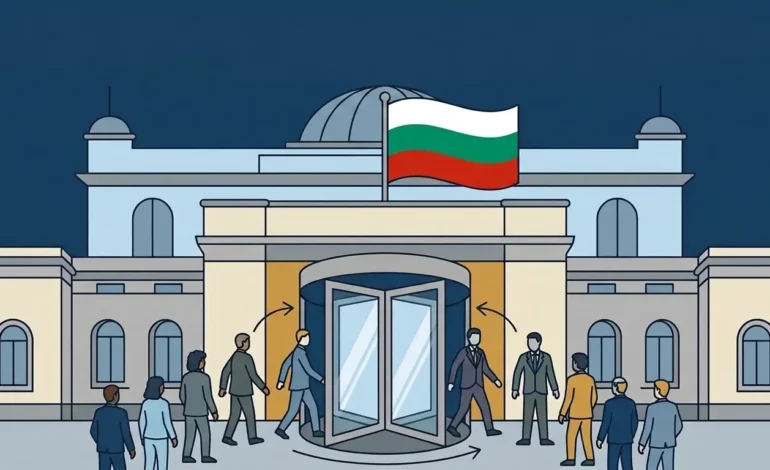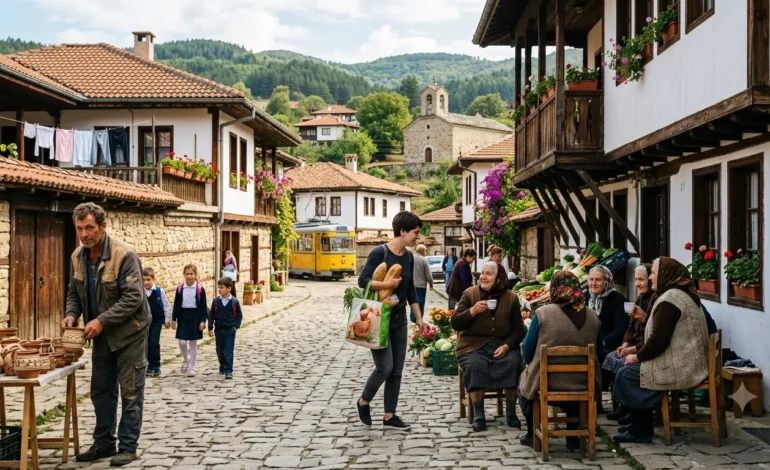
Why Is Bulgaria One of the Cheapest Countries in Europe?

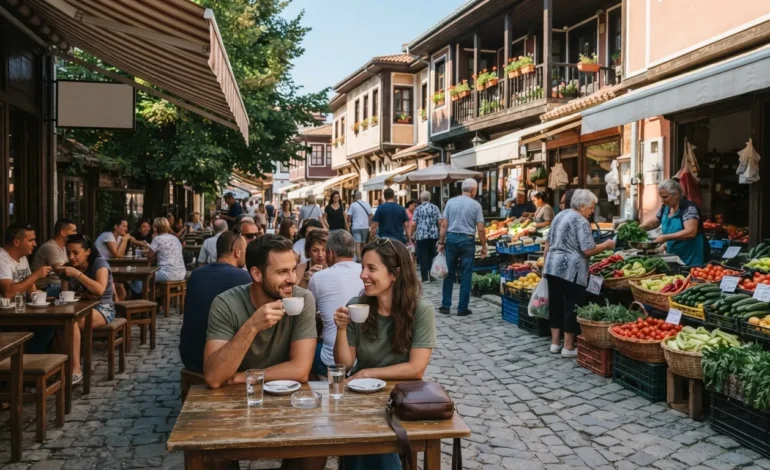
A look at the economics, history, and human cost behind one of the EU’s most affordable countries.
Imagine sitting down to a three-course lunch in a Sofia restaurant — a bowl of tarator (cold yoghurt soup), a grilled pork cutlet, and a coffee to finish — and paying around €6 for the whole thing. Picture renting a one-bedroom apartment in the Bulgarian capital for less than €500 a month, catching a bus across the city for roughly €0.50, and buying a kilogram of ripe tomatoes at the weekend market for under €1. For a Western European visitor, these numbers can feel almost surreal.
Bulgaria is a full member of the European Union. It operates within the same single market that governs prices in Paris, Berlin, and Amsterdam. It adopted the euro on 1 January 2026. Yet, despite all of this, it remains comfortably among the least expensive countries on the continent — the kind of place where a budget traveller can live well, and where a remote worker with a modest Western salary can feel genuinely wealthy.
So why? How can a country that shares a political and economic framework with Luxembourg and Ireland cost so dramatically less to live in? The answer involves wages, history, housing markets, tax policy, and a set of structural realities that have shaped Bulgaria’s economy for decades. It also involves some uncomfortable trade-offs that the “cheap country” label tends to obscure.
Is Bulgaria Really That Cheap?
Before exploring the reasons, it is worth confirming just how affordable Bulgaria is — and putting that into perspective.
According to Numbeo, the consumer price index database built from user-submitted data across hundreds of cities, the cost of living in Bulgaria runs roughly 40% lower than in the United States, and rent is around 72% cheaper. Against most Western European countries, the gap is similarly striking. A comparable one-bedroom apartment in central Rome costs €1,200–€1,600 a month; the equivalent in Sofia runs under €500. A monthly public transport pass in London exceeds €200; in Varna, Bulgaria’s main Black Sea city, it costs around €26. A mid-range dinner for two in Frankfurt might come to €80; in Plovdiv, Bulgaria’s second city, you would be hard pressed to spend that much.
Even within Central and Eastern Europe, Bulgaria consistently sits near the bottom of the price ladder. It undercuts Poland, the Czech Republic, and Romania on both rent and restaurant prices. Within the region, only parts of the Western Balkans — countries that are not EU members — tend to be consistently cheaper across the board.
This affordability shows up in official EU data too. Eurostat’s purchasing power parity comparisons consistently show Bulgarian price levels well below the EU average, particularly for services, hospitality, and housing. For groceries, the gap narrows somewhat when it comes to imported or branded goods, but locally grown produce, dairy, and bread remain substantially cheaper than in Western Europe.
Lower Salaries Mean Lower Prices
The most direct explanation for Bulgaria’s low prices is also the most important one: wages are exceptionally low by European standards, and prices follow wages.
In 2024, Bulgaria had the lowest average annual salary in the European Union at around €15,400, according to Eurostat. The EU average that year was approximately €39,800. Luxembourg, at the top of the table, recorded average annual salaries of €83,000 — more than five times what the average Bulgarian earns. Even countries at the lower end of the Western European spectrum, like Spain or Italy, pay their workers roughly twice what Bulgarian employers do.
The minimum wage tells a similar story. As of 2026, Bulgaria’s minimum monthly wage stands at €620 — still the lowest statutory floor in the EU, even after a 12.6% increase at the start of the year.
This wage gap explains a great deal about price levels. Businesses in any country must price their goods and services at levels their local customers can actually afford. A restaurant in Sofia that charged Berlin prices would have no customers. A landlord asking London rents would have empty rooms. When the majority of people earn €1,000–€1,500 a month, the entire economy adjusts around that reality — from what a coffee costs to what a haircut costs to what a month’s rent looks like.
The logic works in reverse too. Because goods and services are cheap, wages do not need to be high to maintain a reasonable standard of living. The result is a self-reinforcing equilibrium: low wages produce low prices, and low prices make low wages more sustainable. It is not a comfortable arrangement for those living inside it, but it is a coherent one.
A Different Economic History
To understand why wages are so low in the first place, you need to look at history.
Bulgaria spent most of the 20th century under communist rule. From 1944 until the fall of the regime in 1989, the country operated as a centrally planned economy — one in which the state controlled prices, production, and employment. There was no functioning market, no private sector to speak of, and no meaningful connection to global capital flows. While this system kept unemployment artificially low, it also kept productivity low, suppressed innovation, and prevented the kind of wealth accumulation that market economies enable over time.
When communism collapsed, Bulgaria faced the same brutal transition that all post-Soviet bloc countries experienced — but it handled it particularly badly. The 1990s brought hyperinflation, bank collapses, and political chaos. By 1997, inflation had reached nearly 1,000% annually, wiping out savings and destabilising the entire economy. Bulgaria introduced a currency board that pegged the lev to the German mark (later the euro) to bring stability — and while this policy worked, it also constrained the tools available for economic management.
By the time Bulgaria joined the EU in 2007, it was already the bloc’s poorest member, and it has remained so. GDP per capita in 2022 stood at around €13,300 — roughly 62% below the EU average. That gap has been narrowing, and wages have been growing quickly in recent years (average earnings rose by 71.8% between 2018 and 2023). But catching up with decades of divergence takes time, and the structural legacy of the communist period — underdeveloped institutions, limited capital accumulation, a workforce not yet fully adapted to high-skill market demands — continues to influence the economy today.
In economic terms, this is called “convergence.” Poorer EU member states tend to grow faster than richer ones and gradually close the gap. Bulgaria is converging. It is just doing so from a very long way back.
Why Housing Costs Less
Property is often where the affordability of a country becomes most visible, and Bulgaria’s housing market has several features that keep costs low.
One of the most striking is the homeownership rate. Bulgaria consistently records one of the highest rates of owner-occupied housing in the EU — well above 80% of households own their home. This is a legacy of the communist era, when state housing was sold off cheaply after 1989, often to the families already living in it. The result is a population that largely does not pay rent, which keeps rental demand — and therefore rental prices — relatively subdued.
Construction costs are also lower than in Western Europe. Labour is cheaper, local materials are less expensive, and the regulatory framework, while not without complexity, imposes fewer compliance costs than in countries like Germany or the Netherlands. Sofia apartment prices, even after several years of strong growth, remain a fraction of what comparable properties cost in Warsaw, Prague, or Budapest — let alone London or Paris. Average property prices in central Sofia run at roughly €2,000 per square metre; in central Paris or London, you would expect to pay ten to fifteen times that.
Outside Sofia, prices fall further still. In smaller cities like Plovdiv, Ruse, or Stara Zagora, a two-bedroom apartment can be bought for under €60,000. In rural areas, prices can be startlingly low by any European standard.
This does not mean property has been immune to change. Prices in Bulgaria rose sharply in 2025 and into 2026, partly driven by speculative buying ahead of the euro adoption, and the trajectory is clearly upward. But even after these increases, Bulgaria remains among Europe’s most affordable property markets.
Food, Restaurants, and Everyday Living
Sit down for a meal in Bulgaria and you quickly notice how the whole system fits together.
The country has a strong agricultural tradition. Bulgaria produces its own wheat, sunflowers, vegetables, dairy, and wine. Local markets are well supplied with seasonal produce grown within the country, meaning that the supply chain for basic foods is short and domestic. There is no need to import tomatoes from the Netherlands or cheese from France — these things are grown and made in Bulgaria, which keeps costs down significantly.
For restaurants and cafés, the same wage dynamics that make labour cheaper across the economy apply with particular force. In hospitality, staff costs are the largest single expense for most businesses. When a chef earns €800 a month and a server earns €600, the economics of running a restaurant look very different from those in a country where the same roles command €2,500 and €1,800. A lunch menu at a Bulgarian restaurant — typically two courses with bread — can be offered for €5 to €8 not because the owner is being charitable, but because the cost structure genuinely allows it.
Operating costs compound this. Utilities are cheaper, commercial rents are lower, and the tax burden on small businesses is light. A café in Sofia does not face the same overheads as a café in Vienna or Copenhagen, and customers benefit from that difference every time they order.
The upshot for daily life is that eating well in Bulgaria is genuinely inexpensive. A weekly shop for a single person — bread, dairy, eggs, meat, and vegetables, largely from local producers — can comfortably come in under €40. Eating out regularly adds relatively little to the budget. These are not figures that require sacrifice; they reflect what a normal, decent standard of everyday living costs in the country.
Tourism Without Western European Prices
Bulgaria has quietly become one of Europe’s best-value tourism destinations, and for reasons that go beyond simple cheapness.
The Black Sea coast stretches for nearly 400 kilometres, offering sandy beaches, warm summer seas, and resort towns ranging from the busy package-holiday hub of Sunny Beach to the more refined old-town atmosphere of Sozopol. Inland, the Balkan mountains provide skiing in winter at resorts like Bansko and Borovets, at prices that consistently undercut the Austrian and Swiss Alps — sometimes by a factor of three or four for lift passes and accommodation combined. The country also has a growing spa and wellness tourism sector, fed by hundreds of natural mineral springs.
For budget travellers, backpackers, and those simply looking for a summer holiday that does not require a second mortgage, Bulgaria represents exceptional value. A week in a Black Sea resort, including accommodation, food, and activities, can cost less than a long weekend in Barcelona. The ski season offers similar arithmetic.
More recently, Bulgaria has attracted a wave of digital nomads and remote workers, drawn by the combination of low living costs, fast internet in the cities, a growing English-speaking professional community (particularly in Sofia’s expanding tech sector), and an agreeable climate. A European worker earning a modest remote salary from a Western employer can live very comfortably in Sofia — not because it is a hardship posting, but because the money simply goes further.
Taxes and Business Costs
Bulgaria’s tax system deserves attention as a driver of both low business costs and, by extension, lower consumer prices.
The country operates one of the most competitive tax regimes in the EU. Corporate income tax is a flat 10% — the joint lowest in the bloc, tied with Hungary, and less than half the rate applied in Germany (around 25%) or France (similar). Personal income tax is also a flat 10%, regardless of earnings level. Dividends are taxed at just 5%.
The effects of this system ripple through the economy in practical ways. Lower taxes on business profits mean businesses can operate with thinner margins and still remain viable. Lower personal income taxes mean workers retain more of their nominal salary, which reduces the pressure on employers to offer higher gross wages. The overall tax burden on commerce is substantially lighter than in most of Europe, and this feeds into lower prices for goods and services.
There is a philosophical debate to be had about flat taxes — critics note that a 10% rate is far more burdensome for someone earning €600 a month than for someone earning €5,000 — but from a price competitiveness perspective, the impact is clear. Bulgaria’s low-tax environment has also attracted a range of international businesses and holding companies, which supports employment and brings foreign capital into the economy without dramatically inflating local costs.
But There Is Another Side to the Story
Here is where the picture becomes more complicated — and more human.
The same low prices that make Bulgaria a bargain for visitors and a haven for digital nomads are, at their root, a reflection of what Bulgarians earn. When everything costs less, it is usually because people are paid less to produce it. The affordability that delights the tourist is the daily financial reality of the waiter, the teacher, the nurse, and the construction worker.
Bulgaria is the fastest-shrinking country in the world by some measures. At its population peak in 1987, the country had nearly nine million people. By 2024, that had fallen to around 6.4 million — a decline of over 2.2 million, or roughly 27%. This is driven by a combination of low birth rates, high mortality, and persistent emigration. Since EU accession in 2007 removed all barriers to working anywhere in the bloc, hundreds of thousands of Bulgarians have left for Germany, the United Kingdom, Spain, and elsewhere — drawn by wages that are often two or three times higher for equivalent work.
The emigration is disproportionately concentrated among the young and the educated. Doctors, engineers, IT professionals, and recent graduates leave in numbers that the economy can barely absorb. This “brain drain” weakens the very institutions — healthcare, education, public administration — that residents depend on. The UN has identified Bulgaria as one of the countries whose population is declining the fastest in the world.
Regional inequality adds another layer of complexity. Sofia’s economy has grown substantially, and wages in the capital now average significantly more than in the rest of the country. But outside Sofia — particularly in rural areas and smaller towns — poverty rates are high, infrastructure is often poor, and economic opportunity is limited. Bulgaria has a Gini coefficient (a measure of income inequality) of around 38, placing it among the more unequal EU members. The “cheap” country that budget travellers enjoy contains pockets of genuine hardship that the price tags do not advertise.
The health service struggles with under-funding and a shortage of specialists. The road network outside major cities can be poor. Corruption, while improving, remains a persistent structural problem. These are not exotic complaints; they are the consequences of an economy that has not yet generated the wealth needed to fund the public services that wealthier EU members take for granted.
Is Bulgaria Becoming More Expensive?
The short answer is: yes, gradually — and that process is accelerating.
After years of relative price stability, Bulgaria experienced a sharp inflation surge following the COVID-19 pandemic, with consumer prices rising significantly in 2022 and 2023. Wages have also been growing fast: between 2018 and 2023, average gross earnings rose by nearly 72%, far outpacing most of Western Europe. The minimum wage has been rising consistently, reaching €620 per month in 2026 — still low by EU standards, but a genuine improvement in real terms.
Property prices have climbed sharply, particularly in Sofia and Black Sea resorts. Prices in the Bulgarian real estate market rose by over 15% year-on-year in early 2025, driven partly by speculative buying ahead of euro adoption and partly by genuine demand from a growing urban middle class. The adoption of the euro itself in January 2026 has brought additional attention to the question of price convergence, though early evidence suggests the direct inflationary impact of the currency switch has been modest — a pattern consistent with earlier eurozone joiners like Croatia and Slovenia.
Over the longer term, EU membership and economic convergence will continue to push Bulgarian prices upward. The country’s wage growth is among the fastest in Europe. Its integration with the European single market means that traded goods increasingly reflect European rather than purely Bulgarian pricing. And as more foreign capital enters the property market and the tech sector expands, upward pressure on costs in the cities is likely to continue.
Bulgaria will almost certainly remain among the cheaper EU countries for the foreseeable future — the structural gaps are too large to close quickly — but the extraordinary bargains of a decade ago are slowly becoming more ordinary. The process of convergence is working, even if it is working slowly.
Who Benefits Most from Bulgaria’s Low Costs?
The answer to this question depends almost entirely on where your income comes from.
For a tourist or a short-term visitor, Bulgaria is a straightforwardly good deal. Your income is generated at home, your savings are denominated in a stronger currency, and the lower prices represent pure benefit. A British retiree, a German freelancer, or an American backpacker can enjoy a genuinely high quality of life in Bulgaria at a fraction of what it would cost at home.
For a digital nomad or remote worker earning in euros or pounds while spending in Bulgaria, the arbitrage is even more pronounced. The country’s combination of good urban infrastructure, relatively high internet speeds, an expanding English-speaking professional community, and low costs has made Sofia particularly attractive to this demographic. A modest Western salary can fund a comfortable Sofia life, with money left over.
For a Bulgarian resident earning a local salary, the arithmetic looks different. Prices are low, yes — but so are wages. The purchasing power of a Bulgarian salary, while improving, remains constrained. Bulgarians cannot take advantage of the same affordability premium that visitors enjoy, because they are not importing income from elsewhere. They live inside the system, not outside looking in. For them, “cheap” is simply what things cost — and it reflects what they earn.
This distinction matters. It is easy to celebrate a country’s affordability from the vantage point of a higher income. It is harder to see that the same economy which offers remarkable value to outsiders has not yet generated the wages, services, and opportunities that its own residents deserve.
What the Price Tag Doesn’t Say
Bulgaria’s low prices are not an accident, a quirk, or simply a matter of things being “cheap.” They are the visible expression of a specific economic history: decades of communism that stunted capital accumulation and institutional development, a brutal post-1989 transition, a tax system designed to attract business, a housing market still shaped by the privatisations of the early 1990s, an agricultural sector capable of feeding much of itself, and wages that — despite rapid recent growth — remain far below the European average.
Those low wages are the central fact. Almost everything else about Bulgaria’s affordability flows from them. Low wages mean low prices for services and restaurants. Low wages mean low construction costs and affordable housing. Low wages make the country attractive to tourists and foreign businesses, which in turn supports employment — but has not yet, for most Bulgarians, produced the kind of prosperity that wealthier EU members enjoy.
The country is changing. Wages are rising. Property is becoming more expensive. The tech sector in Sofia is growing. Euro adoption connects Bulgaria more firmly to European financial markets. The convergence process is real and ongoing.
But for now, Bulgaria remains one of Europe’s most affordable countries — a place where a traveller can eat well, sleep well, and see a great deal for very little money. That is genuinely valuable. It is also worth remembering that the prices tell a longer story: about what it means to develop late, to lose a million people to emigration, and to build a modern market economy from very difficult beginnings.
The bill in that Sofia restaurant may be remarkably small. The full accounting of what produced it is considerably more complex.